

Vitality
Black seed oil and inflammation: What human research shows
Black seed oil is frequently described online as anti-inflammatory, but that phrase can make the research sound more conclusive than it really is.
This article explores what human studies show, what remains uncertain and why research should not be interpreted as proof that black seed oil treats inflammatory disease.
Quick answer
Is black seed oil anti-inflammatory?
Human studies suggest that Nigella sativa supplementation may influence several inflammatory and oxidative-stress biomarkers, particularly CRP and TNF-alpha. This is evidence of biological activity worth investigating, not evidence that black seed oil is a proven treatment for inflammation, arthritis or autoimmune disease.
Key takeaways
01
Human research exists
Multiple human trials and meta-analyses have investigated Nigella sativa and inflammatory biomarkers.
02
Some markers changed
Pooled studies have reported reductions in markers including CRP and TNF-alpha, but results are not consistent for every marker.
03
Biomarkers are not symptoms
A change in a blood marker does not automatically mean less pain, more energy or improved mobility.
04
Evidence quality matters
A broader review found that much of the available evidence was rated low or very low quality.
What Is Inflammation?
Inflammation is part of the body's normal defence and repair system.
When tissue is injured or the immune system detects a harmful stimulus, inflammatory processes help recruit immune cells and signalling molecules to respond to the problem. Acute inflammation is therefore not inherently “bad”; it is an important part of normal immune function.
Acute inflammation develops rapidly in response to something such as injury or infection and usually resolves.
Chronic inflammation describes a prolonged inflammatory response that can persist for much longer and may contribute to tissue damage when it does not resolve appropriately.
This distinction matters when discussing supplements.
Saying an ingredient has been studied for its influence on inflammatory biomarkers is very different from saying it should generally “stop inflammation”.
Inflammation is a complex biological process, not a single switch that should simply be turned off.
Learn more about the inflammatory response from the National Library of Medicine
How Do Researchers Measure Inflammation?
Human studies cannot simply ask whether somebody has “less inflammation”.
Researchers usually measure specific biological markers.
C-Reactive Protein — CRP
CRP is a protein produced by the liver. Blood concentrations can rise in response to inflammation.
Researchers commonly measure either CRP or high-sensitivity CRP (hs-CRP) when investigating systemic inflammatory activity.
Tumour Necrosis Factor-Alpha — TNF-α
TNF-α is a cytokine: a signalling protein involved in coordinating immune and inflammatory responses.
It is another marker frequently measured in Nigella sativa research.
Interleukin-6 — IL-6
IL-6 is also involved in immune signalling and inflammatory processes.
Importantly, black seed studies have not always produced consistent findings for IL-6, which is another reason broad claims about “reducing inflammation” need to be treated carefully.
Why Is Black Seed Oil Studied for Inflammation?
Black seed oil comes from the seeds of Nigella sativa, a flowering plant also known as black cumin or nigella.
The seeds contain numerous naturally occurring plant compounds.
The best known is thymoquinone, or TQ.
Laboratory, animal and human research has investigated Nigella sativa in relation to inflammatory signalling, oxidative stress and other biological processes.
But there is an important distinction:
Research on Nigella sativa does not always mean research on cold-pressed black seed oil.
Clinical studies have used preparations including:
- Whole seed
- Ground or powdered seed
- Oil
- Oil capsules
- Extracts
- Different concentrations and daily doses
Research involving isolated thymoquinone introduces another layer again.
That means studies cannot simply be grouped together as though researchers tested identical products.
What Does the Strongest Human Research Show?
2023 Meta-Analysis: 20 Trials and 1,086 Participants
One of the most useful pieces of evidence is an updated 2023 systematic review and meta-analysis examining Nigella sativa and inflammatory and oxidative-stress biomarkers.
Researchers included 20 randomised controlled trials involving 1,086 participants.
The pooled analysis reported significant reductions in:
CRP
TNF-α
Malondialdehyde (MDA)
It also reported increases in:
Total antioxidant capacity (TAC)
Glutathione peroxidase (GPx)
Superoxide dismutase (SOD)
However, the researchers found no statistically significant reduction in IL-6.
Research Snapshot
Study type: Systematic review and meta-analysis
Trials: 20 randomised controlled trials
Participants: 1,086 adults
Topic: Inflammation and oxidative stress
What researchers found: Several inflammatory and oxidative-stress biomarkers changed significantly following Nigella sativa supplementation.
Important limitation: The included trials used different participants, preparations, doses and study durations. The results do not establish that every black seed oil product produces the same effects.
Read the 2023 meta-analysis on PubMed
Why CRP, TNF-α and IL-6 Tell Different Stories
The 2023 results are useful because they demonstrate why inflammation cannot be reduced to a single yes-or-no outcome.
CRP and TNF-α decreased significantly in the pooled analysis.
IL-6 did not.
Earlier reviews have also produced slightly different patterns.
A meta-analysis of 12 controlled clinical trials reported a reduction in CRP and an improvement in total antioxidant capacity, but did not find a statistically significant effect on TNF-α.
What This Means
A statement such as:
“Some human studies have reported changes in inflammatory biomarkers following Nigella sativa supplementation.”
is supported by evidence.
A statement such as:
“Black seed oil eliminates inflammation.”
is not.
Read the 12-trial meta-analysis on PubMed
What Do More Recent Reviews Say?
A more recent umbrella meta-analysis brought together seven previous meta-analyses investigating Nigella sativa, inflammation and oxidative stress.
The pooled analysis reported reductions in:
CRP
TNF-α
MDA
and increases in:
Total antioxidant capacity
Superoxide dismutase.
At first glance, this sounds like very strong evidence.
But there is an important issue.
An umbrella analysis is only as reliable as the trials and meta-analyses underneath it.
That brings us to one of the most important pieces of research in this entire article.
How Strong Is the Overall Evidence?
A 2023 overview assessed 20 systematic reviews and meta-analyses covering Nigella sativa and a wide range of health outcomes.
The authors did not simply ask whether studies had reported positive results.
They assessed:
- Reporting quality
- Methodological quality
- Risk of bias
- Consistency
- Precision
- Overall certainty of evidence
Although potentially beneficial associations were reported across numerous outcomes, the authors found considerable limitations.
Much of the evidence was rated low or very low certainty.
Important Limitation
More studies do not automatically mean stronger evidence.
Twenty small or inconsistent studies do not necessarily provide the certainty of one large, well-designed, independently replicated clinical trial.
This is why Love Organics should distinguish between:
“Research has found...”
and:
“This product has been clinically proven to...”
They are not equivalent statements.
Read the overview of Nigella sativa systematic reviews
Inflammation and Oxidative Stress: What's the Difference?
These terms commonly appear together in black seed research, but they do not mean the same thing.
Inflammation
Inflammation involves immune cells, cytokines and other signalling pathways responding to injury, infection or other stimuli.
Common research markers include:
CRP
TNF-α
IL-6
Oxidative Stress
Oxidative stress relates to the balance between reactive molecules and the body's antioxidant defence systems.
Research may measure:
MDA — malondialdehyde
SOD — superoxide dismutase
GPx — glutathione peroxidase
TAC — total antioxidant capacity
Many Nigella sativa trials measure both groups of markers.
That explains why black seed research is often described as examining both inflammatory and antioxidant effects.
It does not mean the terms can be used interchangeably.
Does a Lower Inflammatory Marker Mean You Will Feel Better?
Not necessarily.
This is one of the most important limitations to understand when reading nutrition and supplement studies.
Imagine a clinical trial reports a statistically significant reduction in CRP.
That tells us something changed in the blood.
It does not automatically tell us that participants experienced:
- Less pain
- More energy
- Better mobility
- Better sleep
- Improved quality of life
- Slower disease progression
Those are separate clinical outcomes and need to be measured separately.
A biomarker can help researchers understand what may be happening biologically.
It should not automatically be translated into a customer-facing promise.
What About People With Metabolic Conditions?
Researchers have also specifically examined inflammatory markers in people with metabolic syndrome and related conditions.
A 2023 systematic review and meta-analysis included 16 randomised controlled trials involving 1,033 participants.
The pooled results reported reductions in:
CRP
TNF-α
IL-6
MDA
and increases in:
SOD
Total antioxidant capacity.
Research Snapshot
Trials: 16
Participants: 1,033
Population: People with metabolic syndrome and related disorders
What researchers found: Several inflammatory and oxidative-stress biomarkers changed in the Nigella sativa intervention groups.
Important limitation: These participants had specific metabolic conditions.
The results cannot automatically be applied to:
Healthy adults.
People with an unrelated inflammatory condition.
Every formulation of black seed oil.
Or every person who uses Nigella sativa.
Read the metabolic syndrome meta-analysis on PubMed
Has Black Seed Oil Been Studied for Arthritis?
Yes, but this area is a good example of why individual condition research needs particularly careful interpretation.
Rheumatoid Arthritis Research
A randomised, double-blind, placebo-controlled clinical trial involved 42 women with rheumatoid arthritis.
Participants in the intervention group received two 500 mg Nigella sativa oil capsules per day for eight weeks.
Researchers measured inflammatory and oxidative-stress markers.
They reported an increase in IL-10 and reductions in MDA and nitric oxide compared with baseline.
However, they found no significant differences in TNF-α, SOD, catalase or total antioxidant status.
What This Study Does Not Prove
This small trial does not establish black seed oil as a treatment for rheumatoid arthritis.
It investigated specific biological outcomes in a specific group of patients using a particular capsule preparation.
Read the rheumatoid arthritis clinical trial on PubMed Central
What About Osteoarthritis and Joint Pain?
A 2024 systematic review examined randomised trials involving Nigella sativa in people with knee osteoarthritis.
It identified six trials involving 370 participants.
Among four studies assessing topical Nigella sativa oil, three reported greater pain reduction than placebo.
Two studies assessed oral oil, with only one reporting an improvement in pain relative to placebo.
Another trial using oral capsules did not demonstrate a difference in pain reduction.
Crucially, the review authors described the evidence as conflicting and low quality and concluded that there was insufficient evidence to make clinical recommendations for or against using Nigella sativa to treat osteoarthritis.
What This Means
There is genuine clinical research into Nigella sativa and joint conditions.
That is interesting.
It is not the same as saying:
“Black seed oil treats arthritis.”
Love Organics should not make that claim.
Read the 2024 osteoarthritis systematic review
What Is Thymoquinone and Why Is It Important?
Thymoquinone is one of the best-known naturally occurring constituents of Nigella sativa.
It is often described as the plant's “active compound”, but that simplification needs some context.
Whole black seed contains numerous compounds.
Cold-pressed black seed oil contains a complex mixture of naturally occurring constituents.
Isolated thymoquinone is a specific chemical compound.
They are not interchangeable.
Laboratory and animal experiments investigating concentrated or isolated thymoquinone can help scientists explore biological mechanisms.
But they cannot automatically demonstrate what will happen when someone consumes ordinary cold-pressed black seed oil.
Good to Know
When reading a headline about thymoquinone, check whether the study involved:
Humans or animals?
Whole black seed or isolated TQ?
Oral oil or an extract?
What concentration?
What outcome was measured?
Those details can completely change what the study actually tells us.
So, Is Black Seed Oil Anti-Inflammatory?
The most accurate answer is:
Human research suggests that Nigella sativa may influence some inflammatory biomarkers, but that is not the same as establishing black seed oil as a clinically proven anti-inflammatory treatment.
Meta-analyses have reported reductions in markers including CRP and TNF-α.
Other markers have produced less consistent results.
The underlying studies also vary considerably in their design, population and Nigella sativa preparation.
A more scientifically accurate description is:
Nigella sativa has been investigated for potential anti-inflammatory and antioxidant effects in human clinical research.
Rather than:
Black seed oil treats inflammation.
What Current Research Does Not Prove
Research discussed in this article does not establish that black seed oil:
Treats chronic inflammation
Treats rheumatoid arthritis
Treats osteoarthritis
Treats autoimmune disease
Treats myocarditis or inflammation of the heart
Replaces anti-inflammatory medication
Prevents inflammatory disease
Produces the same effects in every person
Produces the same effects as isolated thymoquinone
It also does not mean someone diagnosed with an inflammatory condition should alter prescribed medication or medical treatment.
Where Love Organics Organic Black Seed Oil Fits
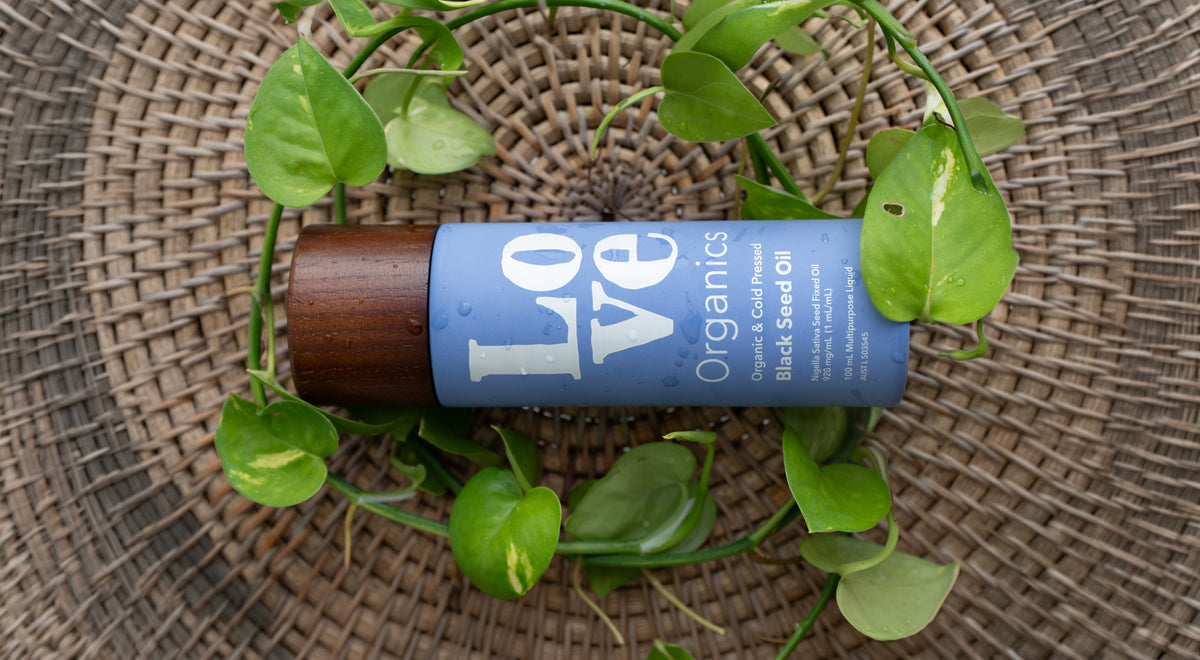
Love Organics Organic Black Seed Oil is made from Nigella sativa seed oil.
The product is listed on the Australian Register of Therapeutic Goods as Black Seed Oil, ARTG ID 503545, sponsored by BBLO Pty Ltd. The TGA entry identifies Nigella sativa as its ingredient.
The research discussed throughout this article should not be interpreted as research conducted specifically on the Love Organics product unless a study explicitly used that product.
Love Organics Black Seed Oil should be used according to its own label directions rather than doses copied from unrelated clinical trials.
View Black Seed Oil AUST L 503545 on the TGA
Explore Love Organics Organic Black Seed Oil
Research at a Glance
ResearchSizeWhat was reportedImportant limitation2023 inflammation meta-analysis20 RCTs / 1,086 peopleReduced CRP, TNF-α and MDA; increased several antioxidant markersIL-6 was not significantly reduced; studies variedMetabolic-condition meta-analysis16 RCTs / 1,033 peopleChanges in CRP, TNF-α, IL-6 and oxidative markersSpecific clinical populationRheumatoid arthritis trial42 peopleChanges in some immune/oxidative markersSmall study; several markers unchangedOsteoarthritis systematic review6 RCTs / 370 peopleSome trials reported improvements in painEvidence described as conflicting and low qualityUmbrella meta-analysis7 meta-analysesPooled changes in several inflammatory and antioxidant markersDepends on quality of underlying evidenceOverview of systematic reviews20 meta-analysesMany potentially positive associationsMuch evidence rated low or very low certainty
Frequently Asked Questions
Does black seed oil reduce inflammation?
Human studies have reported changes in several inflammatory biomarkers following Nigella sativa supplementation, including CRP and TNF-α. However, the research does not establish black seed oil as a treatment for inflammation or inflammatory disease.
Is black seed oil anti-inflammatory?
It is more accurate to say that Nigella sativa has been studied for potential anti-inflammatory effects. Some human trials and meta-analyses have reported changes in inflammatory markers, but evidence varies between markers and study populations.
Does black seed oil lower CRP?
Several pooled analyses have reported reductions in CRP following Nigella sativa supplementation. A 2023 meta-analysis of 20 randomised controlled trials reported a significant pooled reduction. That does not mean every person or every black seed preparation will produce the same result.
What is TNF-alpha?
TNF-α is a cytokine involved in immune and inflammatory signalling. It is one of several biological markers researchers have measured in clinical studies of Nigella sativa.
What is the relationship between black seed oil and oxidative stress?
Black seed research frequently investigates oxidative-stress markers alongside inflammation. Meta-analyses have reported changes in markers such as MDA, SOD, GPx and total antioxidant capacity, although findings vary.
Can black seed oil help arthritis?
Clinical studies have investigated Nigella sativa in rheumatoid arthritis and osteoarthritis, but the evidence is not strong enough to establish it as an arthritis treatment. A 2024 osteoarthritis review specifically concluded that low-quality and conflicting evidence prevented clinical recommendations.
Can black seed oil replace anti-inflammatory medication?
No. The research discussed here does not establish black seed oil as a replacement for prescribed anti-inflammatory medication or other medical treatment.
Is thymoquinone the same as black seed oil?
No. Thymoquinone is one naturally occurring compound found in Nigella sativa. Whole black seed oil contains multiple compounds. Findings from studies using isolated thymoquinone should not automatically be applied to whole black seed oil.
Why do black seed studies reach different conclusions?
Trials differ in the form of Nigella sativa used, dosage, study length, participant health, sample size and outcomes measured. These differences can produce different results and make direct comparisons difficult.
Should I take the same amount of black seed oil used in a clinical study?
No. Clinical-study dosages should not be copied as consumer directions. Studies may use different extracts, oils, powders and preparations. Follow the directions on the specific product and seek professional advice where appropriate.
Takeaway
There is real human research behind the scientific interest in black seed oil and inflammation.
Randomised controlled trials and meta-analyses have reported changes in inflammatory biomarkers including CRP and TNF-α, as well as several markers associated with oxidative stress and antioxidant defence.
That deserves to be discussed.
But it also deserves to be discussed accurately.
Not every inflammatory marker improves consistently. Study preparations vary. Many individual trials remain relatively small, and broader assessments have identified important weaknesses in the certainty and methodological quality of the evidence.
The evidence therefore supports saying that Nigella sativa is being actively investigated for its effects on inflammatory and oxidative-stress biomarkers.
It does not justify presenting Love Organics Black Seed Oil as a treatment for inflammation, arthritis or another inflammatory disease.
Disclaimer
The information in this article is provided for general educational purposes only and is not medical advice. It is not intended to diagnose, treat, cure or prevent inflammation, arthritis, autoimmune disease or any other medical condition.
The research discussed may involve different forms of Nigella sativa, including seed oil, capsules, powders, extracts or isolated compounds, and may use doses or preparations that differ from Love Organics Organic Black Seed Oil. Unless specifically stated, the studies referenced were not conducted using the Love Organics product.
Research findings relating to inflammatory biomarkers such as CRP, TNF-α or IL-6 should not be interpreted as proof that black seed oil will reduce symptoms or treat an inflammatory condition in an individual.
Always read the product label and follow the directions for use. Speak with a qualified healthcare professional before using black seed oil if you are pregnant, breastfeeding, taking medication, preparing for surgery or managing a medical condition.
Do not stop, replace or alter prescribed medication or medical treatment based on information contained in this article.
Research Snapshot
Nigella sativa and inflammatory biomarkers
What the research found
The analysis reported reductions in CRP, TNF-alpha and malondialdehyde, alongside increases in several antioxidant markers. It found no significant reduction in IL-6.
Important limitations
Studies used different forms, doses, populations and treatment periods. Biomarker changes do not establish treatment of symptoms or disease, and broader evidence-quality concerns remain.
2023 systematic review and meta-analysis · 20 randomised controlled trials involving 1,086 adults